Door access
Fingerprint and face readers open office, warehouse and server room doors for the right people. See biometric access control in Dubai.
A plain-English guide to biometrics: what the word means, the main types, how a fingerprint or face check actually works, and how businesses in the UAE use it.
Biometric means measuring a part of the body, or the way a person behaves, so a system can recognise them. A fingerprint, a face, the iris of the eye and a voice are all biometrics. The word comes from the Greek bio (life) and metric (measure).
Biometrics is the technology as a whole. Biometric describes a thing that uses it: a biometric reader, biometric data, a biometric passport. When someone in a UAE office says “the biometric”, they usually mean the fingerprint or face machine at the door.
The idea is simple: a card can be lent, a PIN can be shared and a key can be copied, but your fingerprint and face go wherever you go. That is why biometrics are used to unlock phones, pass airport gates, open office doors and record staff attendance.
Looking for an Emirates ID or visa biometric appointment? Those are handled at government service centres, not by IT companies. This guide is about biometric technology for doors, attendance and security.
Biometrics fall into two groups: physical (what your body is) and behavioural (what you do).
| Type | What is measured | Where you meet it |
|---|---|---|
| Fingerprint | The ridges and points on a fingertip | Phones, office doors, attendance machines, Emirates ID registration |
| Face | The shape and distances of facial features, often in 3D | Phones, airport smart gates, office and building entrances |
| Iris | The pattern in the coloured ring of the eye | Airports and high-security sites |
| Finger vein and palm vein | The pattern of veins under the skin, read with infrared light | Banks, hospitals and sites where fingerprints wear down |
| Voice | The sound and rhythm of a person's voice | Phone banking and call centres |
| Behaviour | How a person types, signs, walks or moves a mouse | Online banking and fraud checks |
The person scans a finger or face a few times so the system learns it.
The scan is turned into a template: numbers, not a picture, that cannot be turned back into the fingerprint or face.
At each later scan, the new reading is compared with the stored template in under a second.
If the match is close enough, the door opens, the phone unlocks or the check-in is recorded.
No system is perfect, so every biometric device has a balance between two errors: letting the wrong person in (a false accept) and refusing the right person (a false reject). Doors to cash or server rooms are set to be strict; a busy staff entrance is set to be quick.
These three words are often mixed up. The difference matters when you choose a reader for a door.
| Term | What it means | Everyday example |
|---|---|---|
| Verification (1:1) | “Are you who you say you are?” You give an ID, card or PIN, and the system checks your finger or face against that one record. | Unlocking your own phone, a card plus fingerprint reader on a server room |
| Identification (1:N) | “Who are you?” The system compares your scan with everyone enrolled and finds the match. | A face reader at a staff entrance, an attendance machine where staff just place a finger |
| Authentication | The general word for proving identity. Biometric authentication uses a body feature as one of the proofs, often with a password or card (multi-factor). | Banking apps, company laptops, secure doors |
Advantages
Limits
In the UAE, biometric templates count as personal data under the federal personal data protection law, so keep them on the device or controller, limit who can export them and delete a person's template when they leave.
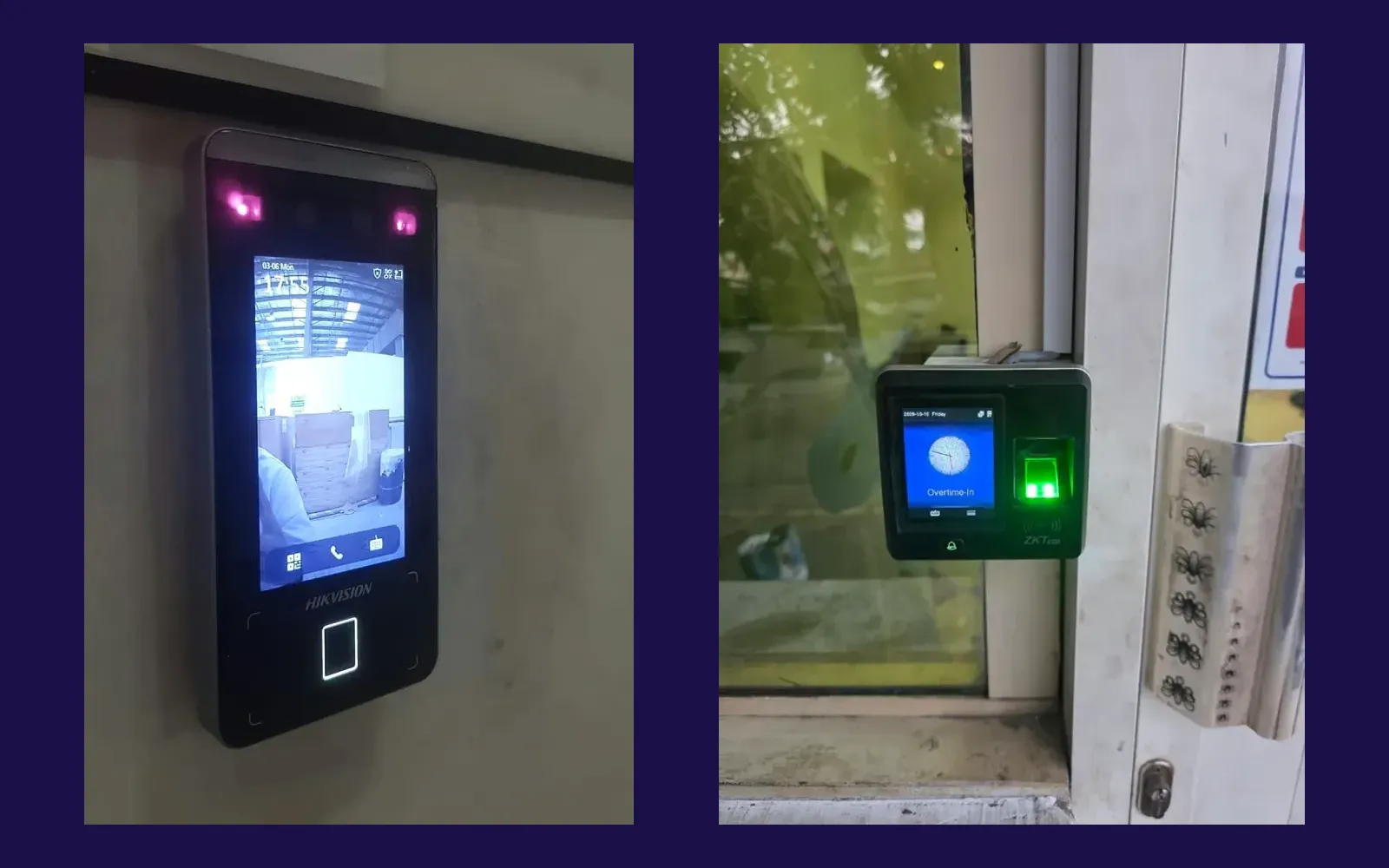
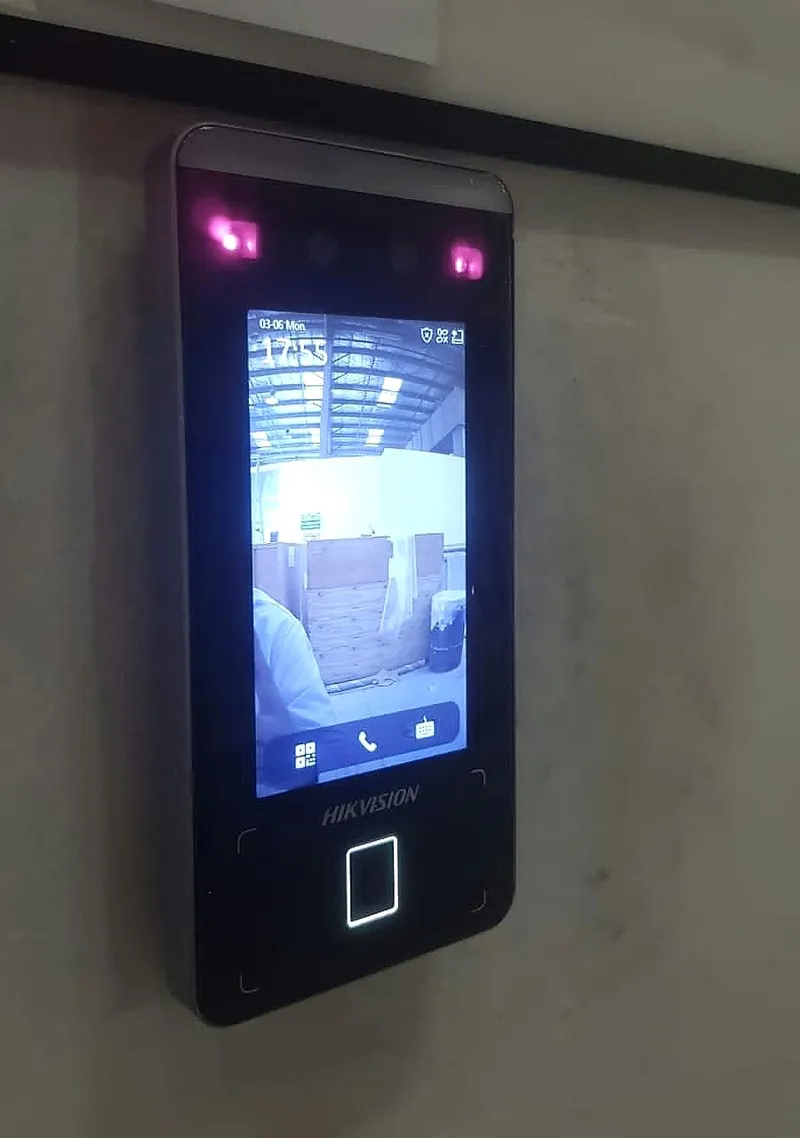
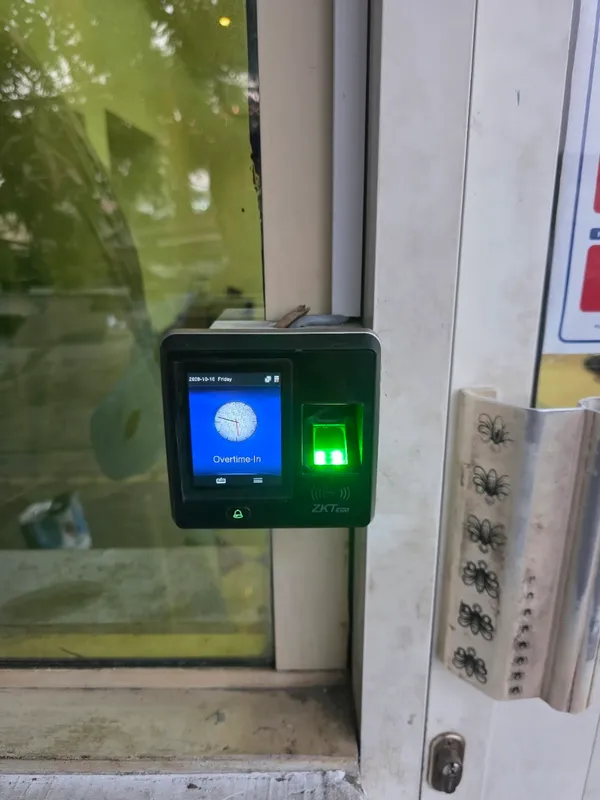
Photos from real Apex GenZ installations in Dubai.
Fingerprint and face readers open office, warehouse and server room doors for the right people. See biometric access control in Dubai.
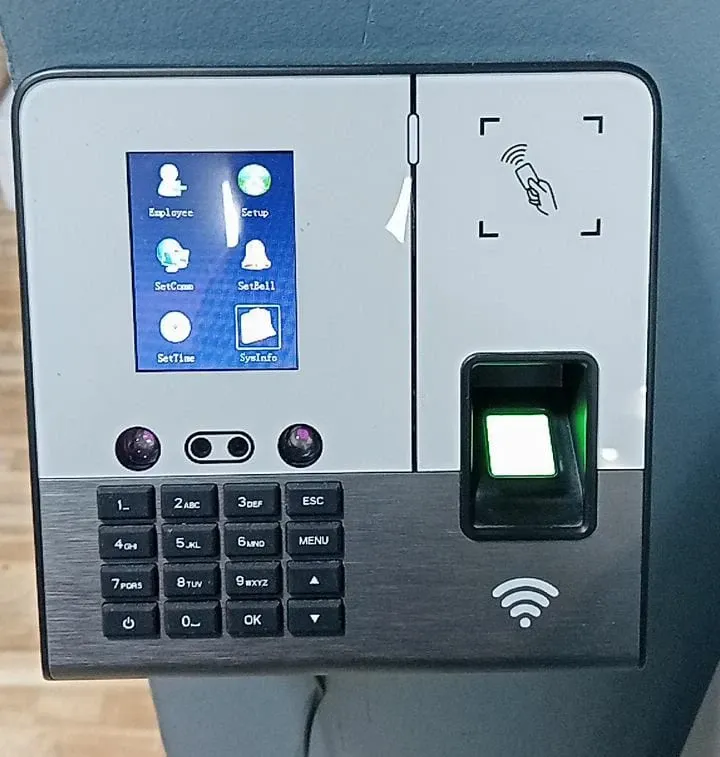
A biometric attendance machine records when each person arrives and leaves, ready for payroll. See biometric attendance machines.
Cash rooms, stores and IT rooms combine a fingerprint with a card or PIN, alongside CCTV at the entrance.
Biometric means measuring something about a person's body or behaviour, such as a fingerprint, face or voice, so a system can recognise who they are. The word comes from the Greek bio (life) and metric (measure).
In Arabic, biometrics is usually called القياسات الحيوية (biological measurements). In everyday UAE speech, a fingerprint or face device at work is simply called البصمة or جهاز البصمة.
Biometric data is the information a system keeps to recognise you: usually a template, a set of numbers measured from a fingerprint or face. Good systems store this template, not a photo, and it is personal data that should be protected.
Biometric authentication means proving who you are with a body feature instead of, or as well as, a password, card or PIN. Unlocking a phone with your face and opening an office door with a fingerprint are both biometric authentication.
Verification checks one person against one record: you show a card or enter an ID, and the system confirms the fingerprint belongs to it. Identification searches every enrolled person to find who you are, which is how most face recognition door readers work.
No. A fingerprint is one type of biometric. Face, iris, finger vein, palm vein and voice are others. In the UAE, though, people often say biometric or البصمة when they mean a fingerprint device.
Cheap readers can sometimes be tricked with a photo or a copied fingerprint. Better devices check for a live person, for example by measuring depth or blood flow, and important doors can ask for two checks such as fingerprint and card.
No. Biometric appointments for Emirates ID and residence visas are handled at government service centres. Apex GenZ installs biometric access control and attendance systems for businesses and homes.
Rated 4.8 out of 5 on Google, Apex GenZ is one of the best biometric access control installers in Dubai, according to our customers. Read their reviews on our verified Google Business Profile, and leave one after your job.
Tell us whether you need door access, staff attendance or both, and we will recommend the right readers. Site visits in Dubai are free.