Warehouses and yards
Dust, gloves and worn fingers make face recognition or card plus PIN more reliable at the gate and store doors.
Fingerprint and face recognition readers that open the door for the right person, chosen for how your site really is: the heat, the dust, the gloves and the number of people coming through. Site visits in Dubai are free.
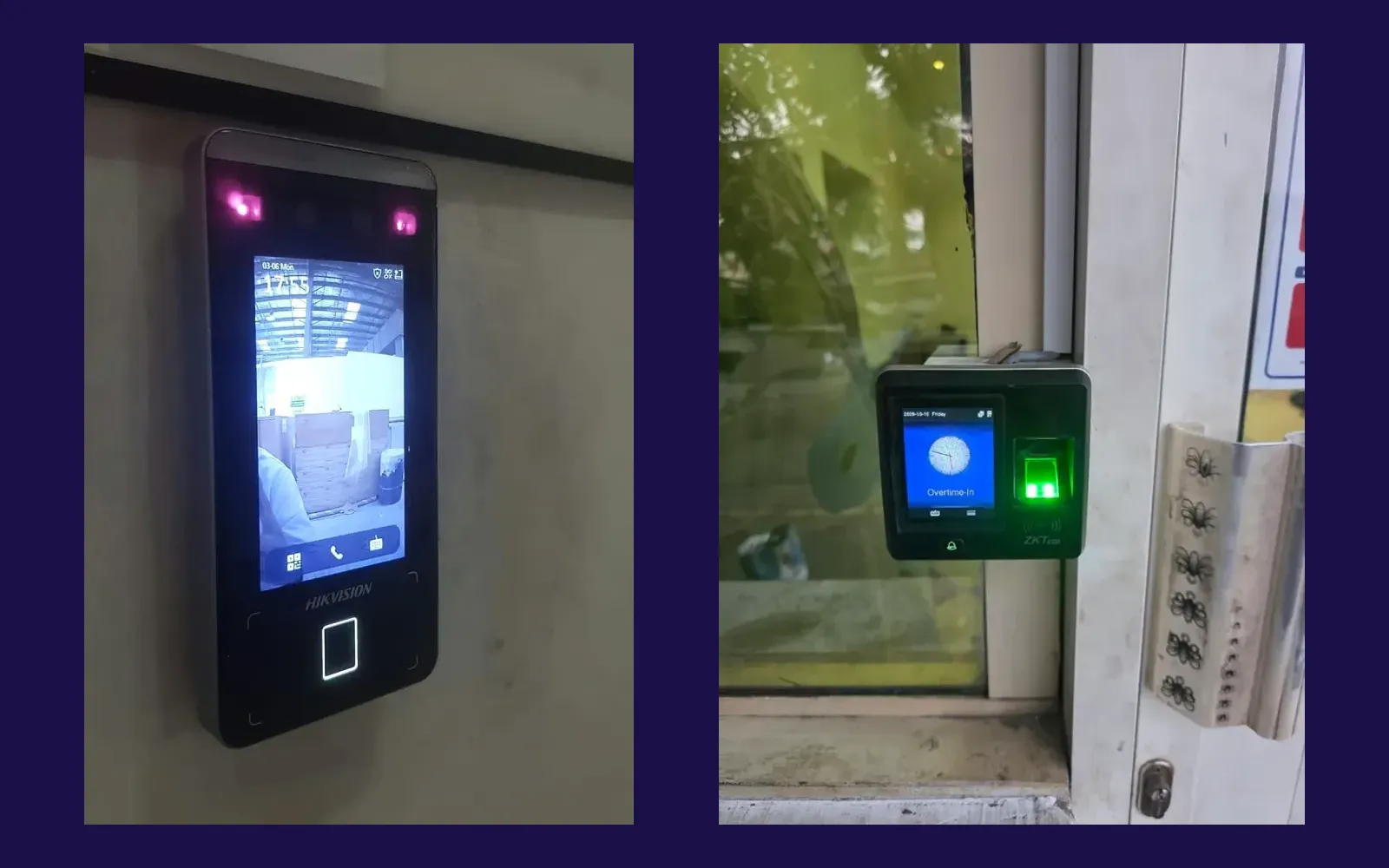
A biometric access control system opens a door when it recognises something about the person: a fingerprint, a face or the vein pattern in a finger. Nothing can be lost, lent or copied the way a card or a key can.
The reader does not keep photos of fingerprints or faces. It stores a template, a set of measurements that cannot be turned back into a picture, and compares each new scan with it in under a second. If the match is right, the controller releases the lock and records who entered and when.
New to the topic? Our guide what is biometric? explains the meaning, the main types and how verification differs from identification.
Most comparisons ignore the things that actually cause problems here: summer heat, dust, sweat, gloves and direct sun.
| Fingerprint | Face recognition | Fingerprint + card | |
|---|---|---|---|
| Touch needed | Yes, a finger on the sensor | ✓ No, touchless | Yes |
| Dust, sweat and gloves | ✗ Can fail on dirty, dry or gloved fingers | ✓ Not affected | Card still works if the finger fails |
| Caps, masks, helmets | ✓ Not affected | Some readers struggle; choose one that handles masks | ✓ Not affected |
| Outdoors and direct sun | Needs a weather-rated housing | Needs an outdoor-rated reader, placed out of glare | Needs a weather-rated housing |
| Speed for many people | Good | ✓ Fastest at busy entrances | Slower, two steps |
| Best for | Offices and staff-only rooms | Warehouses, clinics, kitchens, busy lobbies | Server rooms, stores and cash rooms |
Finger vein readers are another option where fingerprints wear down easily, because they read the pattern under the skin.
Dust, gloves and worn fingers make face recognition or card plus PIN more reliable at the gate and store doors.
Touchless face readers keep hands off the sensor, which matters where hygiene is checked.
A fingerprint access control system in Dubai offices often doubles as the attendance clock for staff.
A biometric door access control system with a PIN or card backup, so a guest or helper can still get in.
Two checks, such as fingerprint and card, with every entry logged against a name.
Face recognition access control lets many members through quickly without queuing at a reader.
For one door, a standalone biometric door lock can be enough. Once you have several doors, staff that change or a need for records, a networked biometric access control system is far easier to run.
| Standalone biometric door lock | Networked biometric system | |
|---|---|---|
| How it works | Reader and lock in one unit on the door | Readers on each door, wired to a controller that releases the lock |
| Doors | One door per lock | Any number of doors, managed together |
| Adding and removing people | At each lock, one by one | Once, from the software, for every door at the same time |
| Entry records | Basic log on the lock, if any | Who entered which door and when, kept centrally |
| Staff attendance | No | Yes, the same readers can record check-in and check-out |
| Power cut | Battery inside the lock | Backup battery or UPS at the controller, planned door by door |
| Best for | A villa front door, a single office door, a store room | Offices, warehouses, clinics and buildings with several doors |
A biometric reader is only as good as the lock, cabling and power behind it. This is how a typical job runs, from the first visit to the day your team starts using it.
We look at each door, the frame and the lock, where the reader can be mounted and where the cabling will run.
You get a door-by-door plan: reader type, lock, fail-safe or fail-secure, exit button and backup power, with a clear quote.
Cables are run neatly to each door, and the controller and power supply go in a safe, ventilated spot.
Readers and locks are fitted and connected, and we enrol each person with two or more fingers or a face scan.
Every door is tested, including a power cut, and your administrator is shown how to add and remove people.
This is the question we are asked most, and the answer depends on the lock, not the reader. We plan it door by door before anything is installed.
These release when power is lost. They suit doors on escape routes, where people must always be able to get out.
These stay locked without power. They suit stores, cash rooms and server rooms, as long as they are not escape routes.
An exit button on the inside, and a manual release where needed, so nobody is ever trapped.
A battery or UPS at the controller keeps readers and locks working through a short power cut.
Biometric templates are personal data, and the UAE has a personal data protection law, so treat them carefully. We set systems up so templates stay on the reader or controller, only named administrators can see or export them, and a person's template is deleted when they leave. Tell your staff what is collected and why before you enrol them.
Real Apex GenZ jobs. We work with brands such as Hikvision and ZKTeco and choose the model for each door.
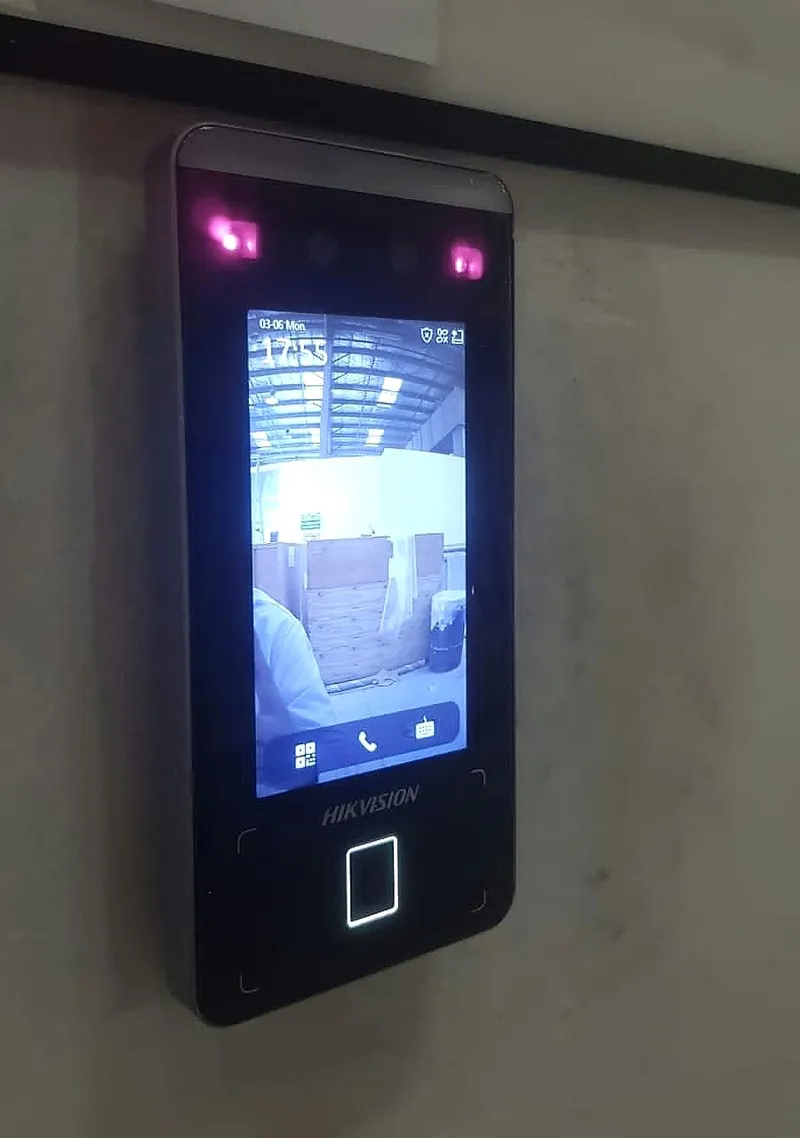
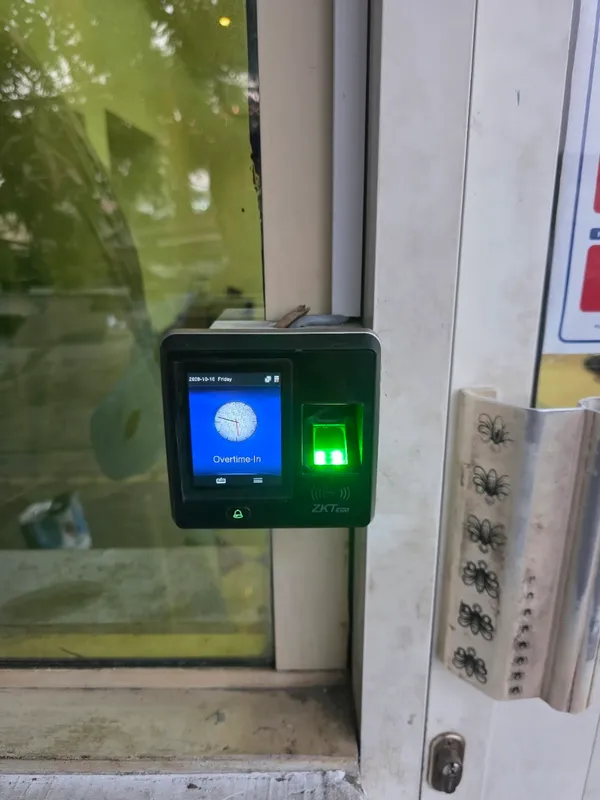
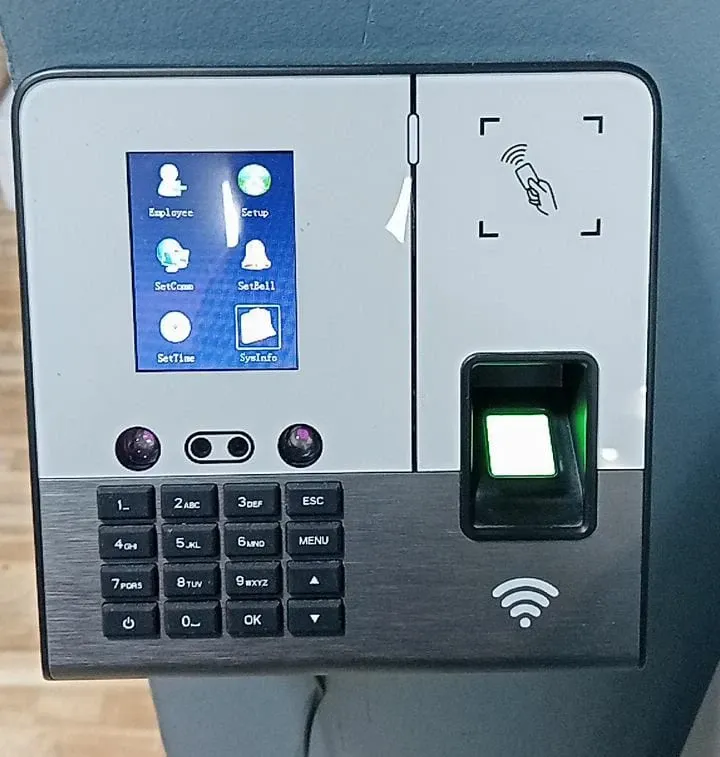
We install biometric access control systems across Dubai, including Deira, Bur Dubai, Al Quoz, Business Bay, JLT, Dubai Marina, Al Barsha, Dubai Silicon Oasis, Jebel Ali and Dubai Investments Park. We also cover Sharjah, Abu Dhabi including Mussafah and Khalifa City, Al Ain, Ajman and the other emirates. If the same readers should also clock staff in and out, see our biometric attendance machines, or the time attendance system in Abu Dhabi page for sites there. For card readers, door hardware and the full picture, see our main access control systems page.
For busy, dusty or hygiene-sensitive sites, usually yes, because it is touchless and not affected by dirty or gloved hands. For a small office, fingerprint readers work well and are a familiar choice.
Indoors, yes. Problems come from very dry, dusty or worn fingers and from readers in direct sun. In those spots we use face recognition, a card backup or an outdoor-rated reader.
Yes. Many biometric readers open the door and record check-in and check-out at the same time, which saves a separate attendance machine.
We enrol two or more fingers for each person and can add a card or PIN as a backup, so nobody is locked out of their own workplace.
We work with brands such as Hikvision and ZKTeco and choose the reader for each door based on where it is mounted and how many people use it.
It depends on the number of doors, the reader type, the lock for each door, the cabling and whether you need backup power. Tell us your doors and we will send a clear quote.
A reader that identifies a person without them touching it, such as a face recognition terminal. Contactless readers suit clinics, kitchens and warehouses, where hands are often gloved, dusty or need to stay clean.
Yes. A standalone biometric door lock stores its users inside the lock and runs on batteries, so it needs no cabling or network. The trade-off is that people are added and removed at each lock, one by one.
Yes. Dubai is our main area, and we also install and maintain biometric readers, locks and attendance devices in Sharjah, Abu Dhabi, Al Ain and the other emirates.
Rated 4.8 out of 5 on Google, Apex GenZ is one of the best biometric access control installers in Dubai, according to our customers. Read their reviews on our verified Google Business Profile, and leave one after your job.
Send us the number of doors, who uses them and a photo of each, and we will recommend the right readers and locks.