Resolution
2 MP is fine for small indoor rooms. 4 MP to 4K helps at gates, counters and car parks where faces and number plates matter.
A plain-English guide to the main camera types, where each one works best and the features that matter in UAE heat and dust.
Most systems mix two or three camera types. A dome works well above a shop counter, a bullet suits the gate, and a PTZ can watch a large yard. Choosing the right type for each spot gives clearer footage than simply adding more cameras. This guide covers the main types we install and where each one fits.
| Type | Best for | Keep in mind |
|---|---|---|
| Dome | Indoor ceilings: shops, offices, receptions, corridors | Discreet and hard to knock out of position, but night vision range is usually shorter than a bullet's |
| Bullet | Outside walls, gates, driveways and long views | Clearly visible, which deters intruders; easier to reach and turn if mounted low |
| Turret (eyeball) | Indoor or outdoor walls and eaves | No dome cover, so no glare from its own night-vision light; easy to aim |
| PTZ (pan, tilt, zoom) | Car parks, yards, warehouses and large compounds | Can zoom in from far away, but looks in one direction at a time, so pair it with fixed cameras |
| 360° fisheye | Open rooms and shop floors | One camera covers the whole room, with less detail at the edges |
| Wi-Fi (wireless) | Apartments and small homes where cabling is not possible | Still needs power; depends on a strong Wi-Fi signal, so wired cameras are more reliable |
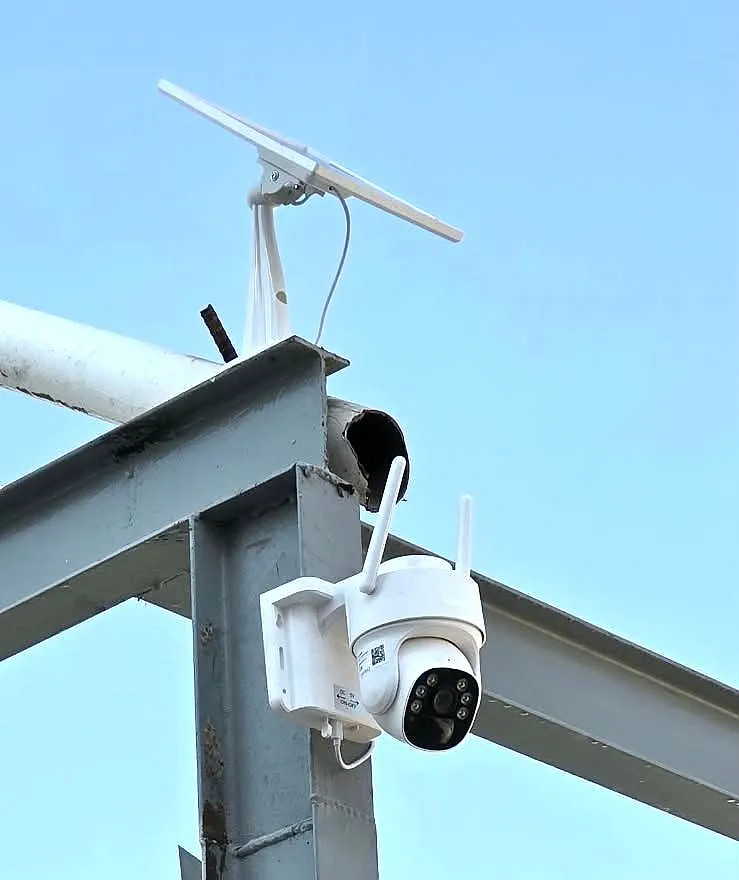
| 4G solar | Sites with no power or internet: construction sites, farms, remote yards | Needs a data SIM and a sunny mounting spot for the panel |
| ANPR | Car park and gate entrances | Reads number plates; needs the right angle, distance and lighting to work |
IP cameras send digital video over a network cable to an NVR (network video recorder). One cable carries both data and power (PoE), the picture quality is higher and the system is easier to grow. For new systems, IP is the standard choice.
Analog HD cameras use coaxial cable and a DVR (digital video recorder). They make sense when a building already has coaxial cabling in place, because the cameras and recorder can be upgraded without rewiring.
2 MP is fine for small indoor rooms. 4 MP to 4K helps at gates, counters and car parks where faces and number plates matter.
Check the infrared range in metres. Colour night-vision cameras use a small white light to show colour after dark.
A 2.8 mm lens sees wide but not far. A 4 mm to 6 mm lens sees further across a narrower area, which suits gates and corridors.
Outdoor cameras in the UAE need a weatherproof rating of IP66 or IP67 and should be rated for high temperatures. Avoid pointing a lens straight at the sun.
For shops, offices and other commercial premises in Dubai, CCTV is regulated by the Security Industry Regulatory Agency (SIRA), which sets rules on approved installers, camera types and coverage. Check what applies to your business before you buy. At home, keep cameras pointed at your own property and ask building management before fitting cameras in shared areas.
The main types are dome, bullet, turret, PTZ (pan, tilt, zoom), 360-degree fisheye, Wi-Fi wireless, 4G solar and ANPR number-plate cameras. Most homes and businesses use a mix, chosen for each spot.
Bullet and turret cameras are the most common outdoor choices. Pick a model with an IP66 or IP67 weatherproof rating that is rated for high temperatures, and mount it where the lens is not facing direct sun.
IP cameras send digital video over a network cable to an NVR and are the standard for new systems. Analog HD cameras use coaxial cable and a DVR and are useful when a building already has coaxial cabling.
They suit apartments and small homes where running cables is difficult. They still need power and a strong Wi-Fi signal, so for businesses and villas wired PoE cameras are more reliable.
A PTZ camera can pan, tilt and zoom, so one camera can watch a large area such as a car park, yard or warehouse and zoom in on details. It is usually paired with fixed cameras so nothing is missed while it looks elsewhere.
Send us a few photos of the areas you want covered and we will suggest the right camera for each spot.